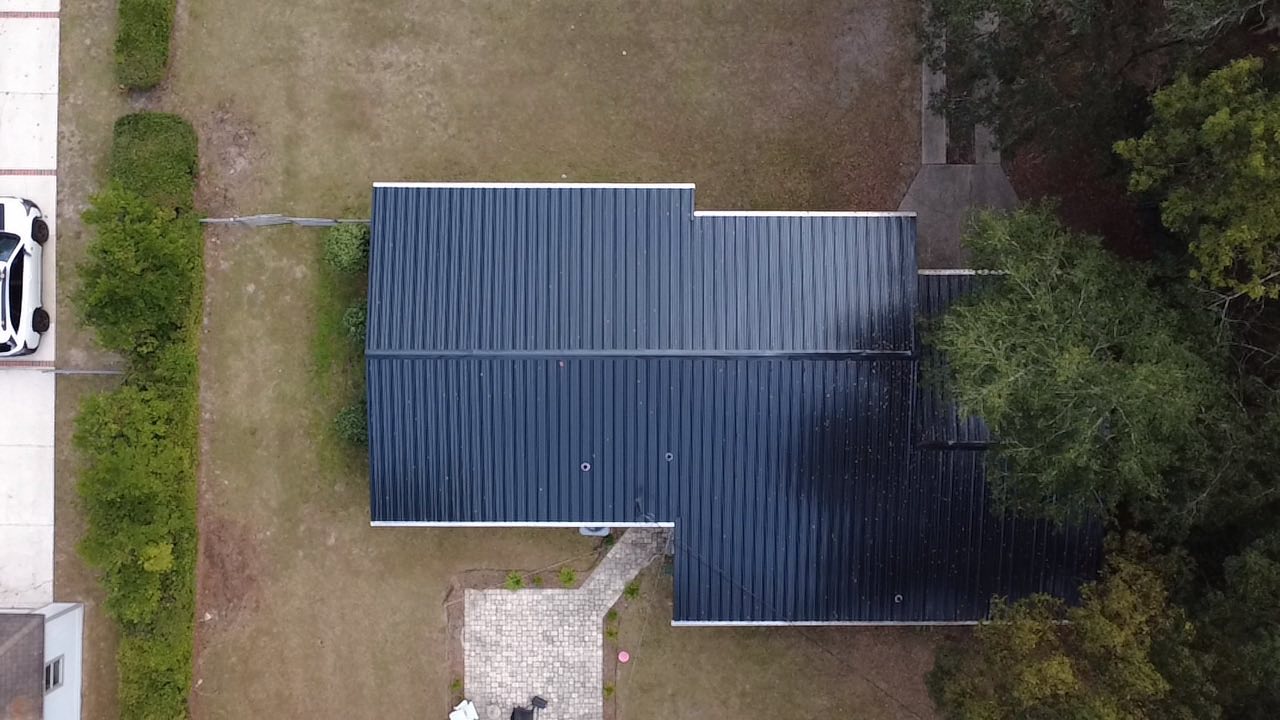
A black metal roof can create a distinctive appearance, but its color alone cannot tell you how it will perform in Gainesville heat. Compare the exact product and the complete roof assembly before treating any finish as an energy-saving upgrade.
1. Compare the actual finish
Different coatings and colors have different properties. A general claim about “metal” or “black roofs” is not enough to establish the performance of the panel being quoted.
2. Look at reflectance and thermal emittance
Solar reflectance describes reflected sunlight; thermal emittance describes released heat. The Cool Roof Rating Council provides product ratings to help compare these properties. Check the exact finish and product listing, including aged values where available. Lighter colors are generally more reflective, but color is not the only factor.
3. Ask about the complete roof assembly
Have your roofer explain the deck, underlayment, ventilation and insulation details relevant to your building. Do not assume every metal roof includes an air gap or that a product rating predicts the temperature inside your home.
4. Compare written evidence, not guaranteed savings
Request the proposed panel and coating specifications alongside other options. Actual comfort and energy use depend on the building and its operating conditions. Ask for building-specific estimates and the assumptions behind any claimed energy savings.
5. Use current rating information
The ENERGY STAR roof-products specification ended on June 1, 2022. Avoid treating an older ENERGY STAR roof claim as current product certification. Consult the official sunset notice and CRRC’s homeowner guidance.
Choose a roof that fits your property
Balance appearance, installation requirements, warranty terms and documented product performance. Explore metal roofing or discuss your options with Entrust. Call (352) 218-7878 or email info@entrustroofingusa.com.